
Search Johnston County Court Records
The main online access point for Johnston County court records is the North Carolina eCourts Portal. The Portal includes Smart Search for case records, Search Hearings for court dates, Make Payments for eligible criminal, infraction, probation, and parole payments, and NC Judgment Search for judgment-index records. Anonymous users can search public court information without registration. A registered account may save cases, but it does not unlock restricted case types.
The Portal works best when the search is narrowed to Johnston County. Smart Search accepts a record number or a name in last, first middle suffix format. The official Portal guide also supports wildcard searches, business-name searches, file-date filters, case-type filters, and case-status filters. Certified copies and older paper records still run through the Clerk of Superior Court.
- Open the eCourts Portal and choose Smart Search for a case record or case summary.
- Enter a case number, citation number, or party name, then use advanced filters if the result set is broad.
- Choose Johnston County under location when the Portal offers a county filter.
- Use Search Hearings when the need is a hearing date, courtroom, judge, attorney, or hearing type.
- Contact the Clerk of Superior Court for certified copies or records not shown online.
The Judicial Branch Portal guide explains the public tools that Johnston County uses for court record search.
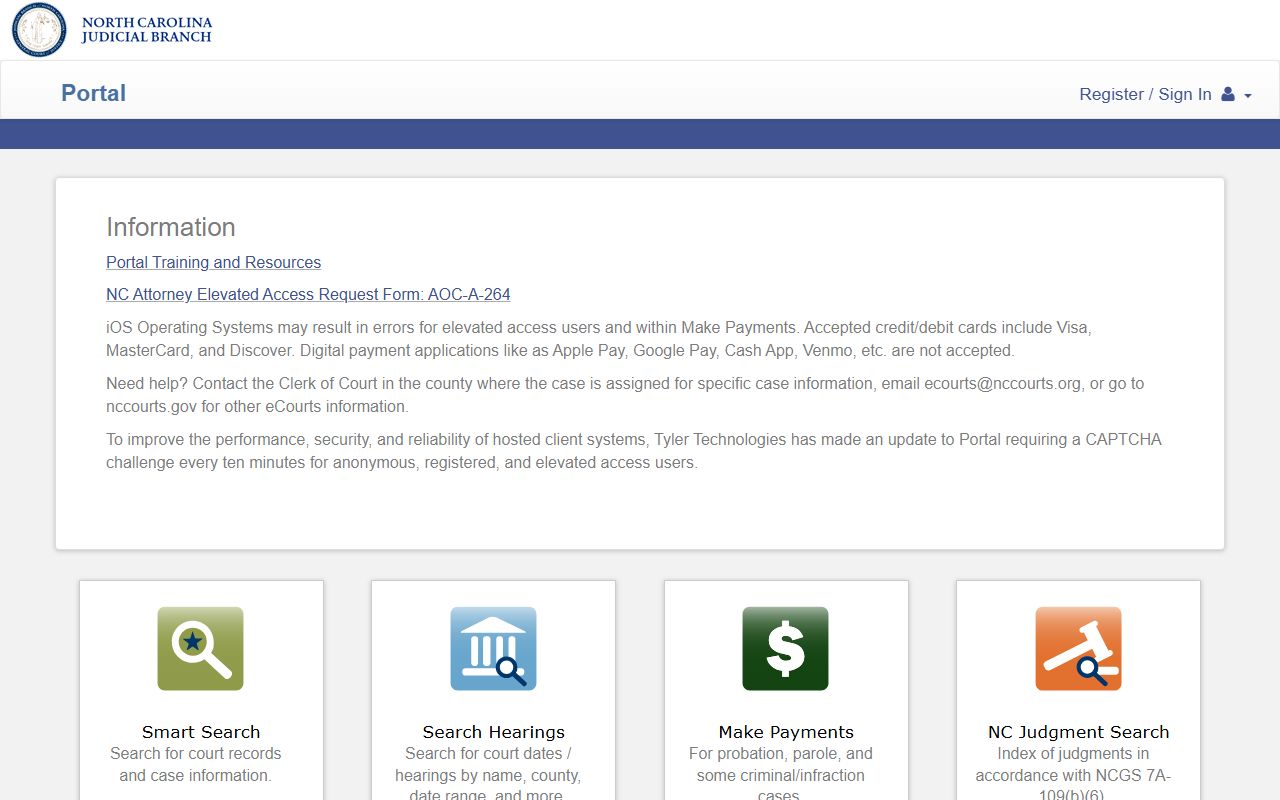
The Portal is the practical starting point because Johnston County was part of the early eCourts counties, so case search, court dates, and eligible payments now route through the same statewide system.
The Judicial Branch also announced that eCourts went live in Johnston County with Harnett, Lee, and Wake counties in 2023.
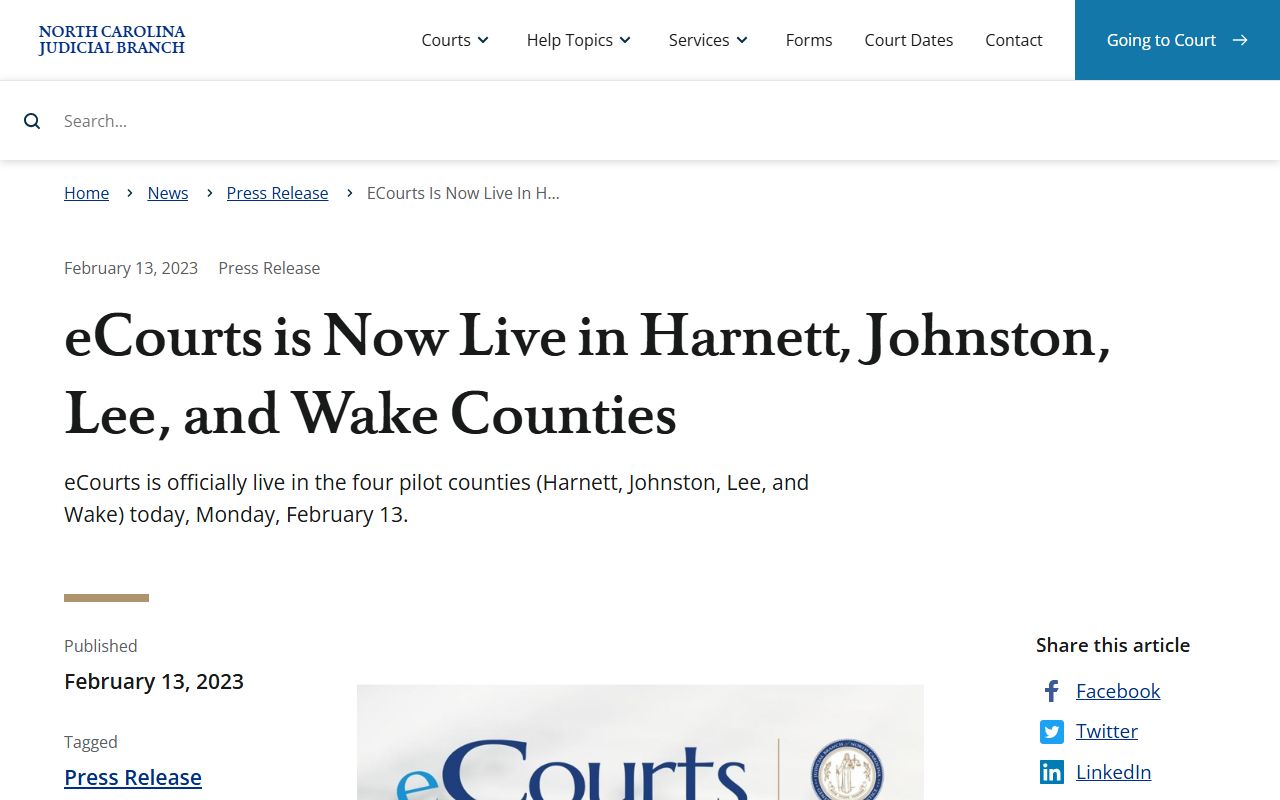
That launch date explains why Johnston County searches now rely on the statewide Portal rather than a county-only case database.
Johnston County Court System
Johnston County is part of the North Carolina General Court of Justice. The trial level is split between Superior Court and District Court divisions, with magistrates serving as judicial officers of District Court. The state appellate courts are the North Carolina Court of Appeals and the Supreme Court of North Carolina. The Judicial Branch lists Johnston County as Prosecutorial District 13, Superior Court District 13, and District Court District 12.
Case flow: Magistrate or District Court process › District Court or Superior Court case › North Carolina Court of Appeals › Supreme Court of North Carolina.
| Court or office | Johnston County role | Common records |
|---|---|---|
| Superior Court | Felonies, civil cases over $25,000, appeals from District Court | Felony files, higher-value civil files, appeals, judgments |
| District Court | Misdemeanors, infractions, traffic, family, juvenile, civil cases at or below $25,000 | Traffic cases, divorce, custody, support, misdemeanors, small-claims appeals |
| Magistrates | Initial appearances, criminal process, small claims, summary ejectment, release matters | Warrant process, release conditions, small claims, civil process |
| Clerk of Superior Court | Record custodian and ex officio probate judge | Case files, dockets, indexes, estate records, certified copies |
Johnston County Courthouse Records
The Johnston County Courthouse is the public hub for Superior Court, District Court, the Clerk of Superior Court, estate administration, court payments, and many case-copy requests. The courthouse page lists wheelchair access, and the official note directs users who need the ramp to the side entrance off Second Street. The Register of Deeds is also in the courthouse, but that office handles marriage licenses, recorded marriage certificates, vital records, deeds, UCC searches, and property fraud-alert services, not divorce decrees or estate files.
Johnston County Courthouse
207 E Johnston St
Smithfield, NC 27577
(919) 209-5400
Monday-Friday, 8:00 AM-5:00 PM
Clerk of Superior Court
PO Box 297
Smithfield, NC 27577
(919) 209-5400
Case files, copies, probate, court payments
Register of Deeds
207 E Johnston Street, Suite 209
Smithfield, NC 27577
(919) 989-5160
Marriage, vital, deed, and UCC records
The official Smithfield history page describes how the county courthouse moved to Smithfield in 1771 and how the town was once known as Johnston County Courthouse.
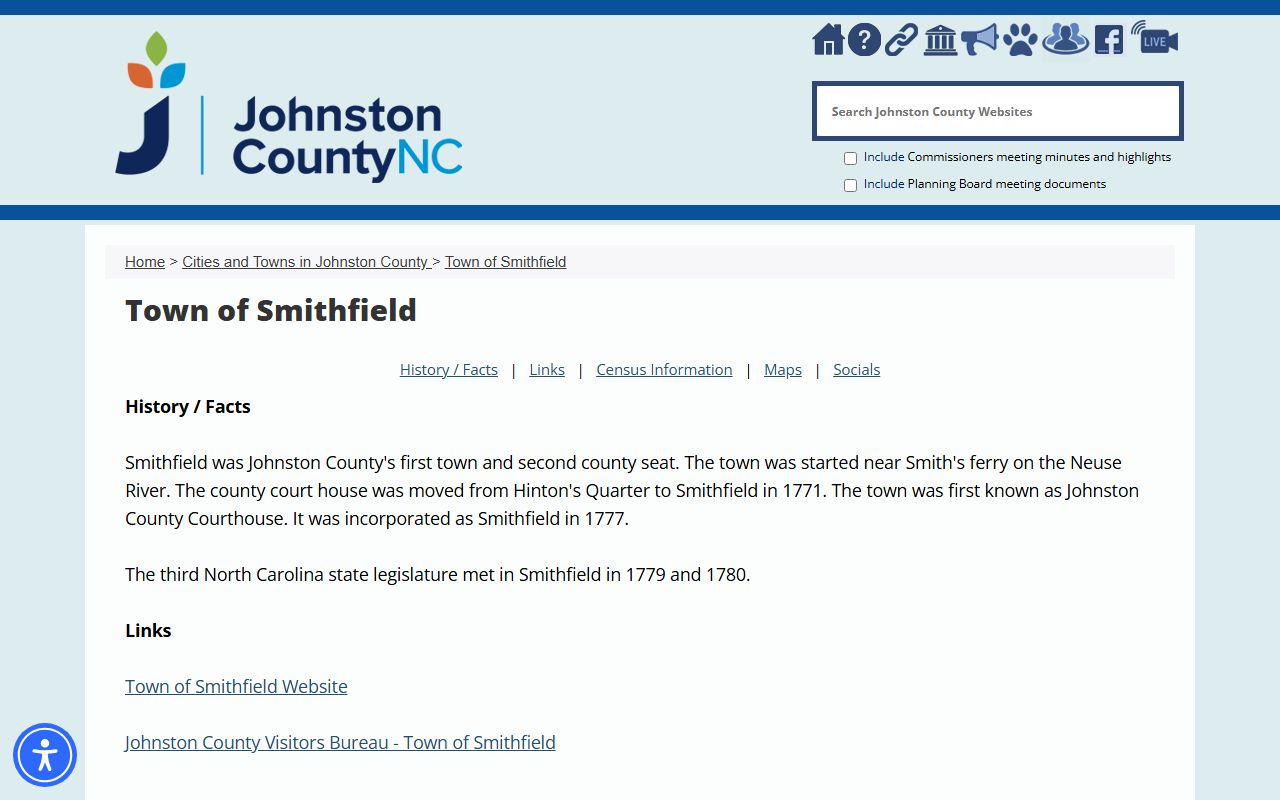
That courthouse-centered history is why downtown Smithfield and Courthouse Square remain the natural reference point for in-person court record requests.
Johnston County Court Record Types
Johnston County court records include civil, criminal, family, probate, traffic, small-claims, judgment, and some protective-order files. The office or tool depends on the record. Portal Smart Search is the main case search path. NC Judgment Search is used for judgment-index records. The Clerk of Superior Court is the copy and records custodian for court files. The sheriff holds jail and recent arrest data, and the Register of Deeds holds marriage licenses and recorded certificates.
- Civil records: complaints, answers, motions, orders, judgments, attorney entries, events, and financial entries.
- Criminal records: charges, appearance dates, bond entries, pleas, motions, dispositions, sentences, costs, and probation terms.
- Family records: divorce, child custody, support, domestic rules, mediation, and related District Court filings.
- Traffic records: citation number, charge, court date, disposition, costs, and payment or waiver status.
- Probate records: wills, estate applications, inventories, accountings, creditor notices, and clerk orders.
What Johnston County Court Records Show
Portal case summaries may show a Case Summary or Register of Actions. The official guide says that summary can include a timeline, case information, assignment information, parties, causes of action for civil, family, probate, and mental-health cases, events, dispositions, hearings, and financial information when applicable. Some fields may be hidden if the case is juvenile, sealed, expunged, confidential, or limited by personal-identifying-information rules.
| Field | What it shows |
|---|---|
| Case number | Enterprise Justice format such as year, case letters, six-digit sequence, and county identifier. |
| Location | Johnston County when the case is filed or heard locally. |
| Parties | Names for plaintiffs, defendants, petitioners, respondents, businesses, or criminal defendants. |
| Events | Filed documents, hearings, orders, motions, and other register-of-actions entries. |
| Disposition | The outcome of a claim, charge, motion, or case. |
| Financial information | Eligible costs, fees, restitution, or payment status when the Portal displays it. |
Johnston County Court Records Access
North Carolina law gives broad public access to many existing public records, but court records also have court-specific limits. In Johnston County, most adult civil, criminal, traffic, estate, and judgment records start with eCourts Portal or the Clerk of Superior Court. A Portal screen is not the same as a certified copy. Older files, sealed issues, and official copies should be checked through the clerk.
Key Statutes:
G.S. 132-6 requires public-record inspection and copies at reasonable times when the record is open.
G.S. 7A-109 covers clerk records, files, dockets, and indexes, except when law bars access.
G.S. 7B-3000 keeps juvenile court records under separate access rules.
G.S. 132-9 gives a remedy when access to a public record is denied.
Restricted Johnston County Records
Juvenile cases, abuse, neglect, dependency files, sealed records, expunged records, adoption files, mental-health proceedings, protected addresses, and sensitive identifiers are not searched like ordinary adult court files. G.S. 7B-2901 restricts abuse, neglect, and dependency records from public inspection except by court order or statutory access. Expunction under North Carolina law removes eligible records from ordinary public criminal-record access, although some government access may remain.
For a sealed or restricted court file, the usual path is not a Portal search. A person must identify the case, contact the Clerk of Superior Court, and follow the court process that applies to that type of file. Some petitions may require notice to the District Attorney, a hearing, or a court order. Exact fees depend on the petition and current court costs.
Johnston County Sheriff Records
The Johnston County Sheriff's Office provides detention, communications, civil, courtroom, and law-enforcement services. The public jail lookup is the Johnston County Inmate Inquiry, which lists current inmates by name, primary charge, and arrest date. JCSO also provides a recent arrest search, but that search is limited to arrests from the last 15 calendar days. Neither one is a confirmed active-warrant database.
Jail questions can require several channels. The sheriff's general phone is (919) 989-5010. Jail general information is (919) 989-5040. The jail FAQ says charge and bond questions may go to the Clerk of Superior Court or jail with the inmate's full name, while release questions may go to the Magistrate's Office at (919) 209-5463. State prison, probation, and parole records are searched through the N.C. Department of Adult Correction offender search, not the county jail roster.
Johnston County Traffic Records
Traffic cases in Johnston County are handled through District Court as infractions, misdemeanors, and related criminal traffic matters. Some citations can be waived or paid without appearing. Other tickets require court. The Make Payments tool can search by citation number, case number, party name, business name, or driver's license, but online payments are limited to eligible matters.
A court traffic record and an NCDMV driver record are not the same file. The court record shows the case, citation, court date, charge, disposition, costs, and payment eligibility. The DMV record shows license status, convictions reported to DMV, wreck information, suspensions, and points. The NCDMV driving-record terms require DPPA and N.C. G.S. 20-43.1 certification.
The Johnston County payment page explains mail, in-person, and online court payment rules.
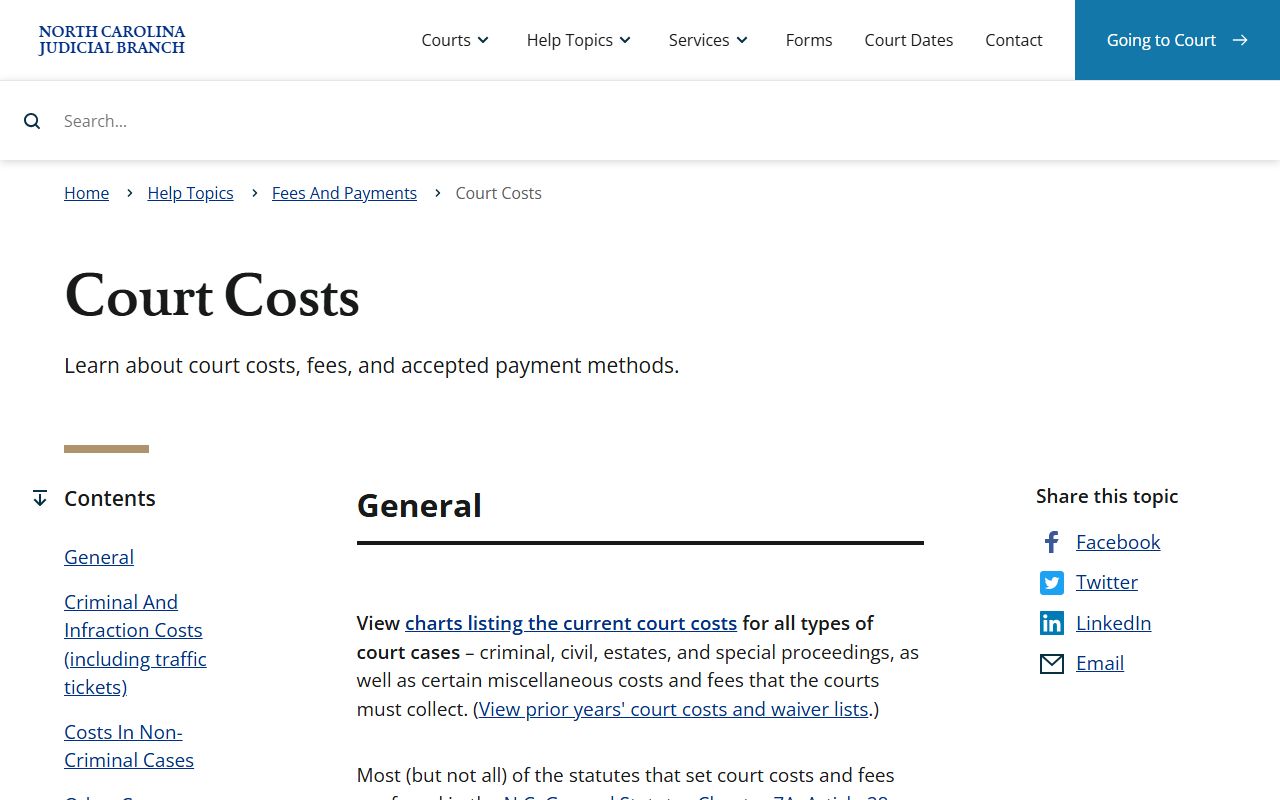
Payment eligibility should be checked in the official court tools because some criminal, bond, child-support, civil judgment, and trust-fund items cannot be paid through the public Portal.
Johnston Marriage Divorce Probate
Marriage records, divorce records, and probate records are split across two local record offices. The Register of Deeds issues marriage licenses, keeps recorded marriage certificates, and handles many vital-record and recorded-document copies. Divorce judgments and divorce case files are court records at the Clerk of Superior Court. Estate records are also with the clerk because the elected clerk acts as probate judge.
Marriage license applicants must complete the online marriage application, schedule an appointment, appear together, show government photo ID, know or document Social Security number status, and pay the $60 license fee. Divorce records can be searched through Portal Smart Search, while certified copies or older divorce files go through the clerk.
- Testator
- A person who made a will.
- Executor
- A person named or appointed to handle estate duties.
- Caveat
- A North Carolina challenge to the validity of a will.
Johnston County Records Fees
Fees depend on the office and the record. Court payment rules are handled by the clerk and eCourts payment system. Register of Deeds fees apply to recorded documents, marriage licenses, UCC searches, and vital records. Court costs should be checked against the current North Carolina court-cost charts before paying or filing.
| Item | Amount or rule |
|---|---|
| Marriage license | $60 issuance fee |
| Register certified recorded-document copy | $5 first page plus $2 each additional page |
| Register uncertified copy | $0.10 per page, with minimum $1 mail processing fee |
| UCC search | $38 per information request, plus $2 per page for copy of statement |
| Mail court payment | Money order or certified check only, no cash or personal checks |
| Online court payment | Credit or debit card plus processing fees for eligible cases |
Interpret Johnston County Records
Several common terms help when reading Johnston County court records. A docket is the list of case activity. A register of actions is the Portal timeline for events and filings. A disposition is the outcome of a charge, motion, claim, or case. A charge is not the same as a conviction. A conviction requires a guilty plea, verdict, or other qualifying finding. A dismissal, reduction, amendment, or expunction can change what a public search shows.
For criminal cases, District Attorney Jason Waller's office prosecutes state cases in Prosecutorial District 13. Law enforcement may arrest or cite, but the prosecutor may screen charges, negotiate pleas, dismiss counts, or seek indictments. Court records can show these changes in events, dispositions, or amended charges.
Johnston County Court History
Johnston County was created in 1746 from Craven County and named for royal governor Gabriel Johnston. Smithfield became the county seat after the courthouse moved from Hinton's Quarter in 1771. Official town history says Smithfield was first known as Johnston County Courthouse and was incorporated as Smithfield in 1777.
The Heritage Center gives older record context, including historical marriage bonds, newspapers, obituaries, soldier records, slave name indexes, cohabitation records, census material, maps, photographs, and genealogy files. Those collections help with historical public-record research, but they are not the path for a certified modern court or vital record.
The Johnston County Heritage Center history describes the county's early record setting.
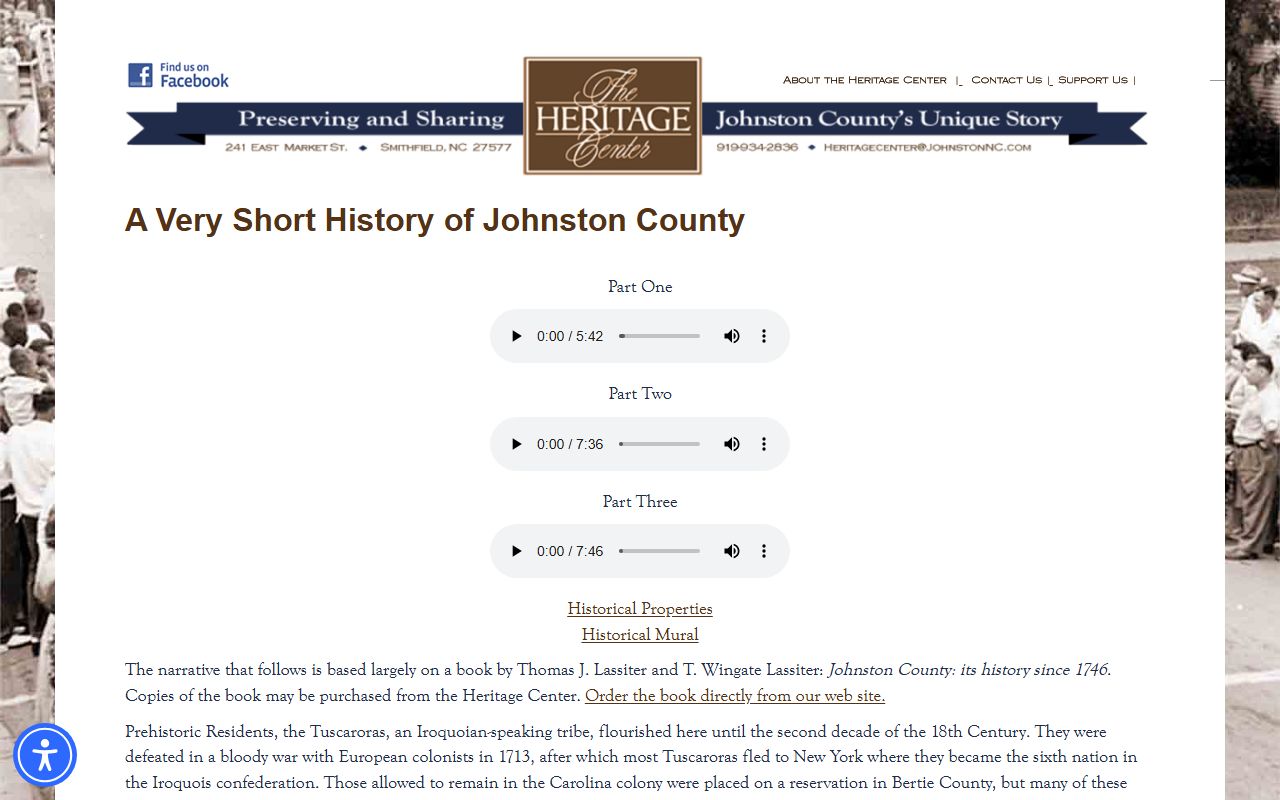
That history matters for genealogy users because older records may reflect county-boundary changes and historic courthouse records rather than current eCourts files.
The Heritage Center's America 250 material adds detail about Smithfield's Revolutionary-era courthouse role and state meetings held there.
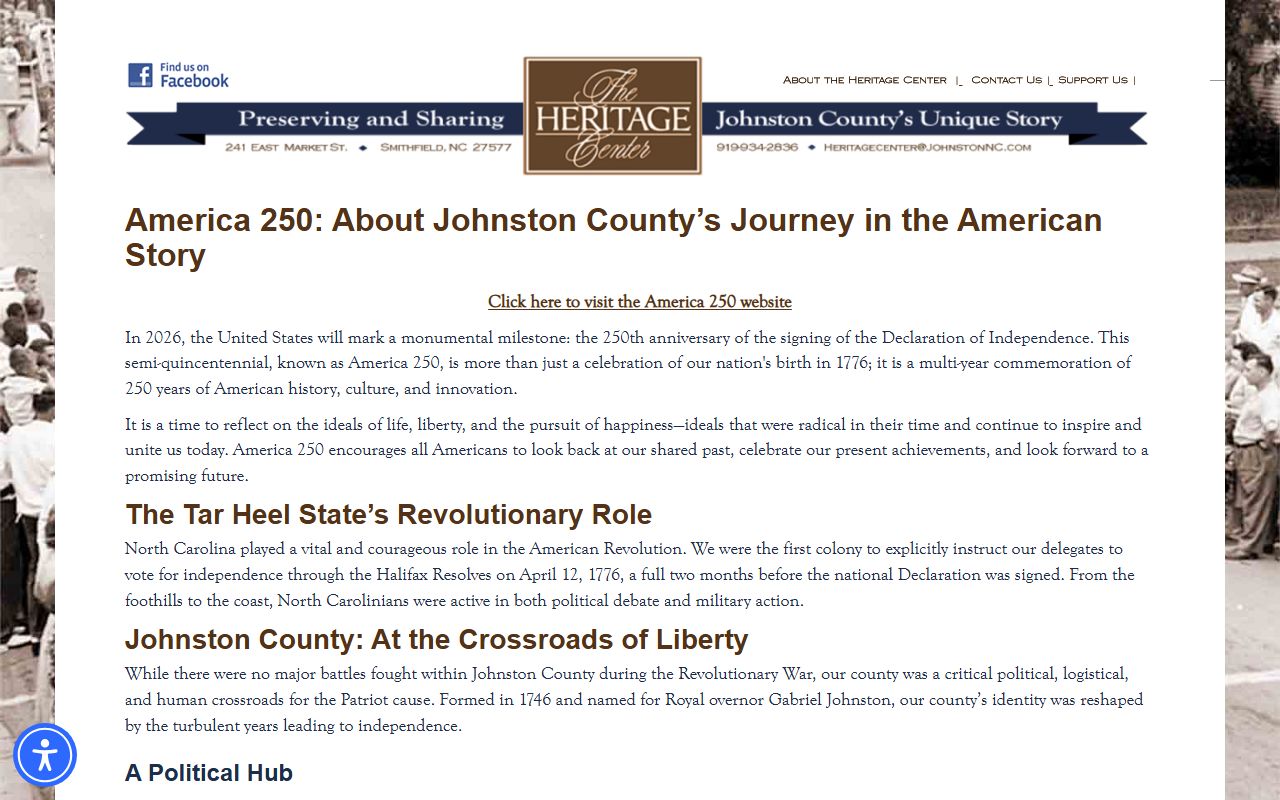
Those sources support the local record context without replacing the Clerk of Superior Court, Register of Deeds, or eCourts for official modern records.
Census QuickFacts for Johnston County shows recent population growth and county size that help explain demand for traffic, family, civil, criminal, and records-counter services.
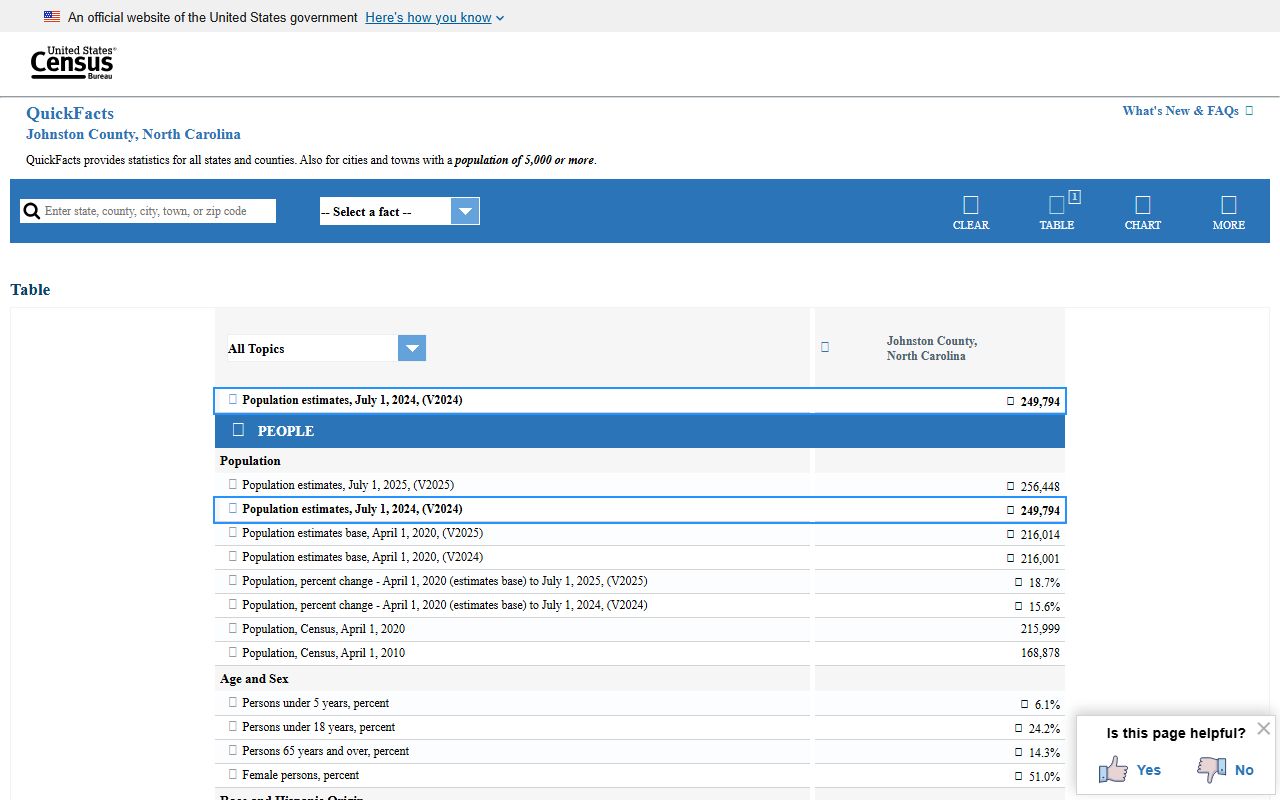
Population growth is not a court record by itself, but it gives useful context for why new residents often need clear routing between the clerk, sheriff, and Register of Deeds.
Johnston County Court FAQs
Where does a Johnston County court records search start?
Most public case searches start in the North Carolina eCourts Portal. Use Smart Search for case summaries, Search Hearings for court dates, Make Payments for eligible payments, and NC Judgment Search for judgment-index records. Certified copies and older records go through the Clerk of Superior Court.
Is there a Johnston County warrant search?
No official public active-warrant list was confirmed in the research. Check the Sheriff's Office, magistrates, Clerk of Superior Court, jail, eCourts Portal, the inmate inquiry, and recent arrest search rather than relying on a third-party warrant site.
Who keeps divorce and estate records?
Divorce case records and estate files are held by the Clerk of Superior Court. Marriage licenses and recorded marriage certificates are handled by the Register of Deeds. The Register FAQ directly points users seeking divorce decrees, estates, or wills back to the clerk.
Are juvenile court records public?
Juvenile court records are restricted under North Carolina law. Abuse, neglect, dependency, sealed, expunged, adoption, mental-health, and sensitive personal data may be hidden or require a court order or statutory authority.