
Search Johnston County Court Records Online
The central online system for Johnston County court records is the North Carolina eCourts Portal. The Johnston County Judicial Branch page points users to online court-date and case services, and the Portal provides Smart Search for case records, Search Hearings for court dates, Make Payments for eligible financial items, and NC Judgment Search for judgment-index records. Anonymous public users can search available public case data without registering. Registration lets a frequent user save cases, but it does not unlock restricted case types.
Use Smart Search first when the goal is a case summary, party search, case number lookup, filing history, disposition, or register of actions. Use Search Hearings when the goal is a hearing date, courtroom, judicial officer, or calendar setting. Use Make Payments only for eligible criminal, infraction, restitution, criminal attorney fee, probation, or parole items. Online payment does not cover alimony, cash bonds, child support, civil judgments, condemnations, rent bonds, trust funds, or upset bids.
The Portal Smart Search interface is the official starting point for many Johnston County court records.

Smart Search is useful when the reader has a case number, party name, business name, or enough detail to filter the search to Johnston County.
- Open the Portal and choose Smart Search for case records and case summaries.
- Enter a record number or a name in Last, First Middle Suffix format.
- Open Advanced Filtering Options when results are broad, then filter the location to Johnston County.
- Use party, business, nickname, sounds-like, case type, case status, or file-date filters when the search needs more precision.
- Open the case summary to review events, hearings, dispositions, parties, attorneys, and financial information when available.
- Contact the Clerk of Superior Court for certified copies, older files, or documents not visible online.
Johnston County Court Records Search Fields
Smart Search accepts broad name and record-number searches, but Johnston County court records are easier to narrow when the search uses the Portal's filters. The official Portal guide states that case numbers in Enterprise Justice use a four-part format: two-digit year, case-type letters, six-digit sequence number, and a three-digit county identifier, such as 21CR000003-910. Wildcard searches are allowed, but they require enough letters or digits to avoid overly broad results.
| Field Label | Type | Required | Notes / Format |
|---|---|---|---|
| Record Number or Name | Text | Yes, unless using advanced fields | Use case number or Last, First Middle Suffix name format. |
| Last Name | Text | For party-name precision | Last-name wildcard needs at least three characters plus an asterisk. |
| First Name | Text | With party-name precision | First-name wildcard needs at least one character plus an asterisk. |
| Middle Name | Text | No | Use when a common name returns too many Johnston County records. |
| Name Suffix | Dropdown | No | Portal requires a valid suffix selection when one is used. |
| Filter by Location | Dropdown or multi-select | No | Select Johnston County to avoid statewide result sets. |
| Search by | Radio or dropdown | No | Party Name, Nickname, Business Name, or Sounds Like. |
| Date of Birth From / To | Date | No | Precision filter, with some access dependent on user authority. |
| Case Type / Case Status | Dropdown | No | Narrows records by matter type or open/closed status where exposed. |
| File Date Start / End | Date | No | Limits results by filing period. |
Types of Johnston County Court Records
Johnston County belongs to North Carolina's General Court of Justice. The Superior Court and District Court divisions are statewide trial courts, with the Clerk of Superior Court serving as the records custodian for court case files. District Court handles misdemeanors, infractions, traffic cases, family cases, juvenile matters, small claims appeals, and civil claims at or below $25,000. Superior Court handles felony criminal cases, civil cases above $25,000, and appeals from District Court and some agencies.
Court records should not be confused with every public record in the courthouse. Marriage licenses, recorded marriage certificates, birth and death certificates, deeds, and many historical indexes are handled by the Register of Deeds. Divorce judgments, estate files, criminal cases, civil cases, and court judgments are handled through the Clerk of Superior Court and the court system.
- Civil records may include complaints, answers, motions, orders, judgments, attorney appearances, and financial entries.
- Criminal records may include charges, appearances, bond or release details, indictments, pleas, motions, dispositions, sentences, costs, restitution, and probation terms.
- Family records may include divorce, custody, support, mediation, equitable distribution, and related District Court filings.
- Estate records may include will probate papers, applications, inventories, accountings, creditor notices, and clerk orders.
- Traffic records may include citations, court dates, charge disposition, costs, and online payment eligibility.
- Judgment records may appear in Smart Search and in NC Judgment Search for judgment-index details.
The NC Judgment Search application is separate from the full Smart Search case view.

Judgment Search can point to indexed judgment details, while the full case summary is still checked through Smart Search or the clerk.
What Johnston County Court Records Show
The official Portal training and resources page describes Smart Search case summaries as detailed, near-real-time register-of-actions records. A case summary may show the case timeline, case information, assignment information, party information, causes of action for civil, family, probate, and mental-health cases, case events, dispositions, hearings, and financial information when applicable. The amount shown depends on case type, public access rules, user role, and whether a document is restricted.
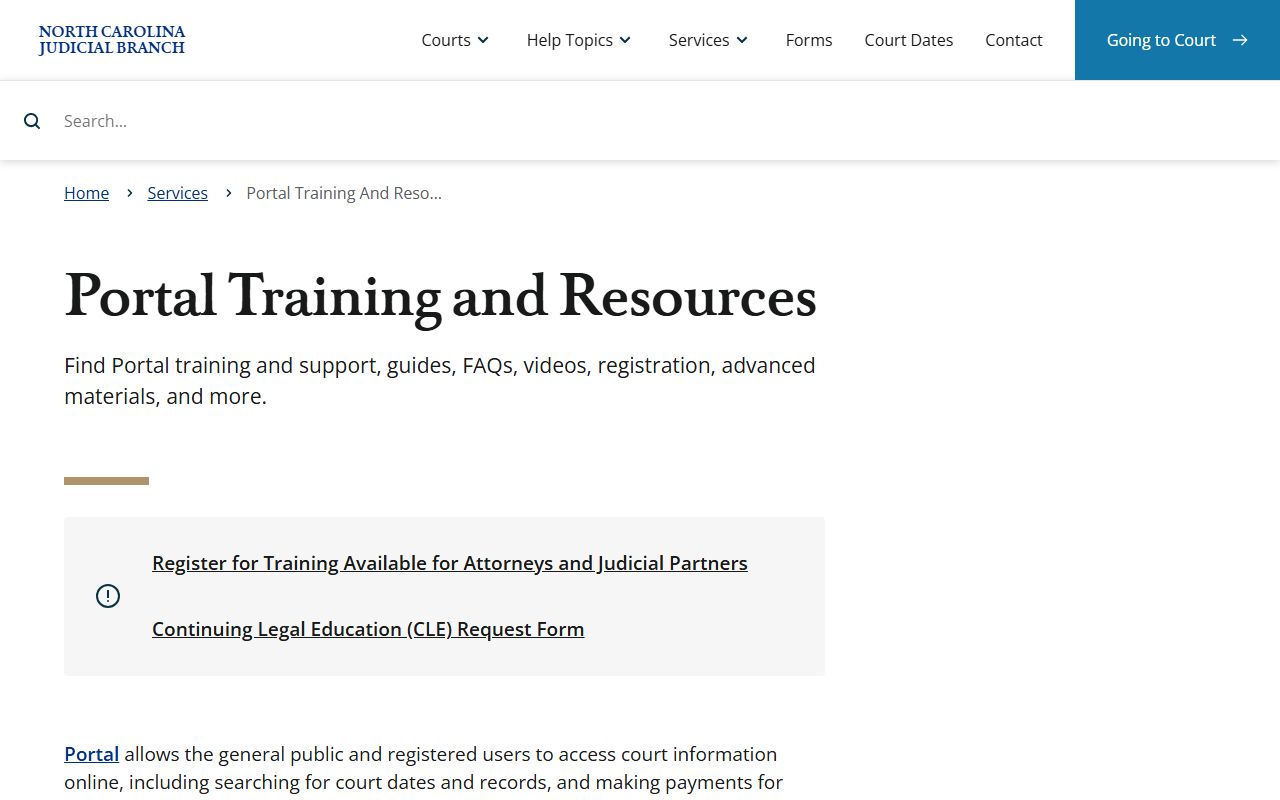
The Portal guide is important because it explains the difference between public search access, registration, and elevated access for restricted data.
| Field | What It Shows |
|---|---|
| Case Number | Year, case type letters, six-digit sequence, and three-digit county identifier. |
| Location | The county or court location tied to the case, including Johnston County when filtered. |
| Case Type | The broad record category, such as criminal, civil, family, probate, traffic, or mental health. |
| Case Status | Whether the matter appears open, closed, disposed, pending, or otherwise classified. |
| Parties | Names of plaintiffs, defendants, petitioners, respondents, or criminal defendants. |
| Attorneys | Attorney names or bar-number searchable information when the field is available. |
| Hearings | Date, time, hearing type, location, courtroom, and judicial officer when public. |
| Disposition | The recorded outcome of a claim, charge, motion, judgment, or case. |
| Financial | Eligible fees, costs, restitution, or payment status when the case supports financial display. |
| Redactions | Hidden or limited fields for juvenile, sealed, expunged, mental-health, or personal data. |
Public Access to Johnston County Court Records
North Carolina law supports inspection of many public records, but court files have their own statutory and court-rule boundaries. G.S. 132-6 requires public-record custodians to permit inspection at reasonable times and provide copies as promptly as possible upon payment of lawful fees. G.S. 132-6.2 addresses copy format and fee rules. For court records, G.S. 7A-109 says clerks maintain records, files, dockets, and indexes, and that records are open during regular office hours unless law bars access.
For most adult public case information, start with eCourts Portal, then use the Clerk of Superior Court for certified copies, older records, and file review. The Judicial Branch also maintains a public-record request process for existing Judicial Branch records, but agencies do not have to create or compile a new record that does not exist. Large-scale data users may need the Remote Public Access Program, which offers statewide criminal and civil data through real-time access and extracts under program rules.
Remote Public Access is a data program, not a substitute for a certified Johnston County court record from the clerk.
Note: Online case information is not the same as a certified copy issued by the Clerk of Superior Court.
Restricted Johnston County Court Records
Not every Johnston County court record is public. Juvenile records have separate statutory handling under G.S. 7B-3000. Abuse, neglect, and dependency records are withheld from public inspection except as allowed by court order or statute under G.S. 7B-2901. Adoption files, mental-health proceedings, protected addresses, minor names, Social Security numbers, financial-account data, and some domestic or safety-sensitive information may also be redacted or hidden.
Sealed and expunged records follow different rules. A sealed record may still exist for court, law-enforcement, or statutory use, but it is not available like an ordinary public case. An expunction removes eligible records from ordinary public criminal-record access if the court grants relief under the controlling statute. North Carolina has multiple expunction categories, including certain first-offender misdemeanor and underage alcohol matters under G.S. 15A-145 and certain nonviolent convictions under G.S. 15A-145.5.
The Judicial Branch court records help topic gives the statewide public-facing overview for court record access.
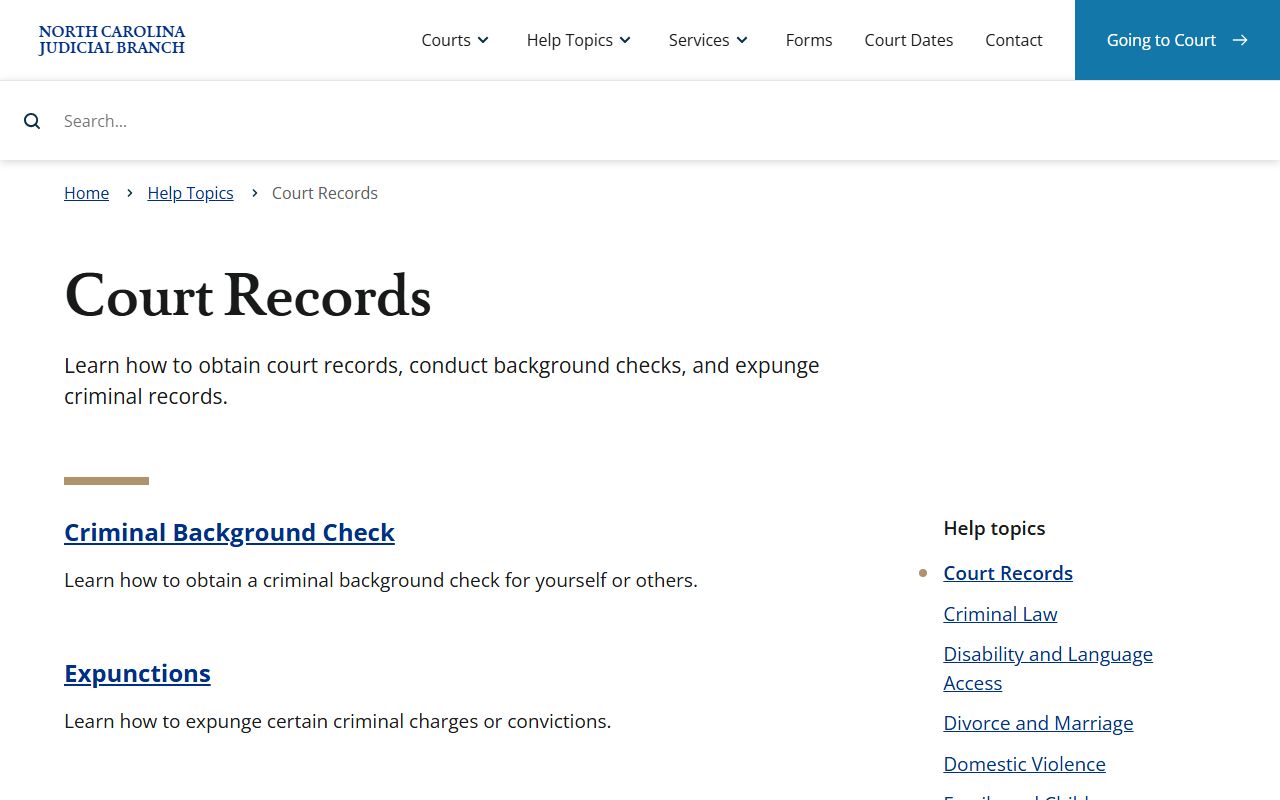
That help topic is a useful starting point when Portal does not show the record or when certified-copy rules matter.
Johnston County Court Records at Clerk Counter
For official copies, older files, missing Portal documents, file-review questions, or case-specific public access questions, use the Clerk of Superior Court at the Johnston County Courthouse. The courthouse is located at 207 E Johnston St, Smithfield, NC 27577, with mail to Johnston County Courthouse, PO Box 297, Smithfield, NC 27577. Public hours listed by the Judicial Branch are Monday through Friday, 8:00 AM to 5:00 PM. The courthouse page notes wheelchair access through the side entrance off Second Street, with the ramp in the middle of the block.
The Clerk of Superior Court is the court-record custodian for Superior Court and District Court files. The same office also handles estate/probate administration because the clerk acts as ex officio Judge of Probate. Marriage licenses and recorded marriage certificates are not clerk court records; those are Register of Deeds records. Divorce judgments, estate files, civil cases, criminal cases, traffic court cases, judgments, and many special proceedings route through the clerk and the court system.
Clerk of Superior Court
Johnston County Courthouse
207 E Johnston St
Smithfield, NC 27577
(919) 209-5400
Monday-Friday, 8:00 AM-5:00 PM